


 |
|
| About
PCS PCS Board Committees Home Page Contact PCS |
|
 |
|
| FAQ Code of Ethics Corporate Members Individual Members Member Profile Application Form |
|
 |
|
| IT
Events Industry Focus Career Focus |
|
Ten
Universal Principles of Great Art and their Applications to Leadership
and Management
Text and photos by Dean Eduardo Morato Jr. My personal encounters with great art works, whether they be paintings or photographs, sculptures or poems, music or drama suggest that they adhere to the universal principles. For this essay, I will apply the ten universal principles to photographic techniques and make a quantum leap to how leaders and managers can apply these principles and techniques to their own spheres of interest. These divergent topics are interwoven for no reason at all except my own love affair with them. 1. UNITY
Photographs manifest this Unity in the overall composition of the subject matter. The picture must compel the viewer to examine the whole portrait or scenery being shown. To attain this effect, the photographer makes sure that the viewer’s eyes do not get fixated dead center by using such techniques as the rule of thirds where the subject matter is placed off-center, somewhere one-third or two-thirds from any edge of the picture. The photograph likewise achieves unity by presenting a coherent theme found either in the subject matter itself or in attributes of the subject matter such as texture, color, patters, contrast, and even emotion. Unity can be attained by presenting an aesthetic arrangement of the subject matter that flows fluidly from left to right, top to bottom and round the picture. Good leaders and managers should pursue this Unity principle in their organizations or enterprises. They should maintain unity of purpose, unity of command and unity of action. Unity of purpose is sharing a common goal. Unity of command means that the leader has the full support of his organization. Unity of action means all units of the organization are moving together to create a sum much greater than the parts. Every member of the corporate team must know how his or her precise role and contribute fully to the unified vision and mission. Factionalism should be eradicated and, in its place, must stand one unified body. 2. HARMONY Closely linked to Unity is the principle of Harmony, for it is hard to achieve the former without the latter. Harmony, however, brings the additional dimension of mutual reinforcement among the various elements of the artwork. There is no jarring piece or discordant note. There is a pleasant gelling of the art elements, which sing out in chorus because they are meant to be together. Harmony is synchronized flow. Photographers deploy techniques like pattern formation and symmetry where the repetition of objects, lines, shapes and people produce visual fluidity. Harmony is also depicted by making the elements of the photograph interact congenially with one another. The photograph establishes rapport between and among individual elements by showing how they are really part of the same message. Leaders and managers need harmonious organizations, partnerships and relationships. They achieve this by making sure that there is a perfect-fit among the company’s objectives, strategies, programs, thrusts, people and systems. One must not undermine the other, but rather amplify it. Since harmony is synchronized flow, leaders and managers much nurture a common culture or a shared way of doing things and establish cross functional team work among the different units under them. Good vertical and lateral communication is vital for organizational harmony. 3. WILL
The photograph illustrates Will through the power of a dominant theme. The photographer who masters speed and aperture settings is able to freeze the subject matter or blur it. He can also create tremendous depth of field or sharpen a solitary figure against a hazy background and foreground. In here, the photographer deliberately wills a desired effect. Leaders and managers must know their precise bottom line. Their plans should spell out the desired outcomes in terms of measurable performance indicators which everybody can understand, relate to and accomplish. These performance indicators or measures must be intimately linked to concrete rewards and recognition. Will means that the Vision and Mission of the organization are brought all the way down to the little activities and tasks that groups and individuals perform. Will means that resources are allocated to strategies that directly address the achievement of the organization’s desired outcomes. 4. STRENGTH
The photographer exhibits Strength through the boldness of the subject matter. The photographer presents an exclamation point in the picture. Sometimes this is achieved by juxtaposing elements in the photograph which shock and discombobulate. But, while doing so, the shocking subject matter does not disintegrate into a repulsive or disjointed picture. The shock elicited is temporary because the picture eventually becomes a revelation of an incisive message. Strength is photography is mastery of camera technology as applied to powerful themes. In the photograph, this is quite evident in the artist’s ability to tame light and weave calibrated lines in his pictorial tapestry in order to illustrate great character in a portrait or dazzling drama in a landscape. The leader or manager, as the pillar of strength, is the role model who must live out the values and virtues of the organization. He speaks for an in behalf of his people. He chooses his captains and lieutenants well. The leader inspires his troops with decisive but well calculated moves. Strength in an organization means having high levels of skills and competency to excel in a competitive world and win convincingly. This means training and good regimentation. Strength likewise means raising organizational standards through the guild up of distinct advantages. The strong leader builds personal charisma. He adeptly deploys symbols and rituals to create compelling myths and ardent followership. He optimizes the use of resources by investing them in the few things that will make a big difference. 5. INTUITION The greatest of all art shines with sheer Intuition, a true knowing without the need for tedious technical processes. Intuition captures the essence of humanity by rendering on canvas or on stone the magnificence of our divine nature. The intuitive artist proceeds and builds from the past, glides over the present and polevaults into the future. He is born before his time. He allows the here and now to get a glimpse of tomorrow. He creates. He innovates. He evangelizes. Photographers serendipitously encounter artistic insights by constantly changing their perspective on a subject matter. They take it from above, from below, from all sides and angles, with all types of lenses and filters. Photographers practice intuition by continually experimenting and experiencing. Then, they step back to reflect on their creation, only to do more experimentation and savor more experiences. The intuitive photographer is driven to take a thousand shots to get the one right one. In fact, he does not get the one right one, it gets him. It just shoots. The leader is a magical innovator. Even before his present ventures reach their peak, he is already on his next project. He is constantly seeking new approaches to old problems and converting present problems into excellent opportunities. The intuitive leader endeavors to continuously make himself and the organization obsolete in order to force a new beginning. Novelty is encouraged and novelty that works is rewarded. |
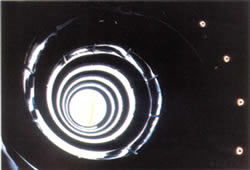 In
great art, there is Unity in the message conveyed and a wholeness in
the impact created. The elements of the painting or musical piece converge
in one inspiring piece.
In
great art, there is Unity in the message conveyed and a wholeness in
the impact created. The elements of the painting or musical piece converge
in one inspiring piece.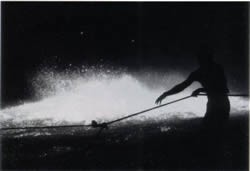 The
great artist demonstrates supreme Will in his work. He says this is
“I” while inviting the rest of the world to identify with
that “I”. The great artist has a grand design, a big dream
to achieve, a deep understanding of man and the world he lives in.
The
great artist demonstrates supreme Will in his work. He says this is
“I” while inviting the rest of the world to identify with
that “I”. The great artist has a grand design, a big dream
to achieve, a deep understanding of man and the world he lives in. Strength
is the courage to express one’s ingenuity and talents. Art with
Strength is both daring and virtuous. It is not ashamed to shout and
deafen. Strength is pride glowing through the masterpiece of the artist.
It personifies the ego and, therefore, individuates the art work from
all others.
Strength
is the courage to express one’s ingenuity and talents. Art with
Strength is both daring and virtuous. It is not ashamed to shout and
deafen. Strength is pride glowing through the masterpiece of the artist.
It personifies the ego and, therefore, individuates the art work from
all others.